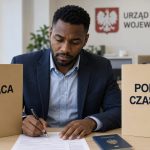
In the Polish legal system, alongside international protection forms like refugee status or subsidiary protection, there is also a national protection mechanism – the permit for stay for humanitarian reasons (zgoda na pobyt ze względów humanitarnych). It is a specific form of stay legalization granted to foreigners in particular situations, often when they do not qualify for international protection, but their return to their country of origin is impossible or impermissible for important reasons. Who exactly can receive such a permit, and what conditions must be met?
What is the permit for stay for humanitarian reasons?
The permit for stay for humanitarian reasons is a national form of protection granted to a foreigner residing in the territory of Poland. Its essence lies in the Polish authorities determining that there are serious reasons why the foreigner cannot be returned or expelled to their country of origin.
- Legal Basis: The main provision regulating this issue is Art. 348 of the Act on Foreigners.
- Who Grants the Permit? Importantly, this permit is not granted by the Voivode (as in the case of most temporary residence permits) nor by the Head of the Office for Foreigners (as for international protection). The competent authority is the Commander of the Border Guard unit or the Commander of the Border Guard post, who issues a decision on this matter, most often during proceedings concerning the foreigner’s obligation to return.
When can a foreigner receive such permit? (grounds from art. 348)
The Act on Foreigners precisely lists the situations in which a permit for stay for humanitarian reasons is granted. This happens if obliging the foreigner to return:
- Could only occur to a country where their right to life, liberty, and personal security would be threatened, or where they could be subjected to torture or inhuman or degrading treatment or punishment, or be forced to work, or deprived of the right to a fair trial, or be punished without a legal basis. (These grounds are similar to subsidiary protection but are assessed domestically by the Border Guard).
- Would violate their right to family or private life within the meaning of the Convention for the Protection of Human Rights and Fundamental Freedoms (ECHR).
- Would violate the rights of the child as defined in the Convention on the Rights of the Child, to an extent endangering their psychophysical development.
- Is impossible for reasons beyond their control (although this ground usually leads to the Voivode issuing a temporary residence permit on a different basis).
Additionally, a separate (though often related) title is the permit for tolerated stay (zgoda na pobyt tolerowany), granted, among others, when expulsion is unenforceable or would violate the right to family/private life in specific contexts of court rulings or decisions by the Minister of Justice. In practice, however, the permit for stay for humanitarian reasons is more commonly applied.
Key differences: humanitarian permit vs. international protection
- Legal Basis: International protection (refugee status, subsidiary protection) stems from international law (Geneva Convention) and EU law. The humanitarian permit is a purely national instrument based on the Polish Act on Foreigners.
- Authority: International protection is granted by the Head of the Office for Foreigners. The humanitarian permit – by the Commander of the Border Guard.
- Context: A foreigner actively applies for international protection. The humanitarian permit is most often considered by the Border Guard ex officio when conducting proceedings regarding the obligation to return (e.g., after a refusal of international protection).
Key differences: humanitarian permit vs. humanitarian visa
- Place and Time of Granting: A humanitarian visa (type D21) is issued by a consul abroad (before arrival) or, in exceptional situations, by the Border Guard Commander at the border (upon entry). The permit for humanitarian stay is granted by the Border Guard Commander to a foreigner already residing in Poland.
- Purpose: A humanitarian visa enables legal entry and stay in Poland for important reasons. A humanitarian stay permit prevents expulsion/return and legalizes the further stay of a person already present in the country.
Rights resulting from the humanitarian stay permit
Obtaining a permit for stay for humanitarian reasons comes with significant entitlements:
- Legal Stay: The permit is granted indefinitely (bezterminowo), which stabilizes the residence situation in Poland.
- Residence Card: The foreigner receives a residence card confirming their status. This card requires periodic renewal (usually every 2 years), but the permit itself remains valid.
- Access to the Labor Market: A person holding a permit for stay for humanitarian reasons has full access to the Polish labor market – they can work without needing a work permit.
- Social Assistance: May entitle to certain forms of social assistance under conditions specified in separate regulations.
What does the granting procedure look like?
Importantly, the foreigner does not submit a separate application for a permit for stay for humanitarian reasons. This issue is examined by the Border Guard Commander ex officio during proceedings concerning:
- Obligating the foreigner to return: If the Border Guard finds grounds for issuing a return decision (e.g., the foreigner is staying illegally, received a final refusal of international protection), it must simultaneously examine whether circumstances under Art. 348 of the Act on Foreigners exist that prevent the execution of such a decision. If such circumstances (e.g., danger in the country of origin, violation of child rights) are found, the Border Guard does not issue a return decision but instead grants the permit for stay for humanitarian reasons.
- Withdrawal of certain residence permits or international protection.
Practical scenario: asylum refusal, humanitarian permit
A family from a country experiencing internal conflict applied for international protection in Poland. After exhausting the procedure (Office for Foreigners, Refugee Board), they received a final refusal decision – it was deemed they did not demonstrate an individual risk of persecution (refugee status) or serious harm under the definition of subsidiary protection. The case was transferred to the Border Guard, which initiated return proceedings. However, during these proceedings, the Border Guard Commander, analyzing the children’s situation, concluded that their return to the unstable region of origin, without access to education and healthcare, would violate the Convention on the Rights of the Child. Consequently, instead of issuing a return decision, the Commander granted the entire family permits for stay for humanitarian reasons based on Art. 348(1)(3) of the Act.
When is it worth seeking legal help?
Cases related to the permit for stay for humanitarian reasons are complex because they most often arise in difficult moments – after refusal of international protection or during return procedures. Assistance from a lawyer specializing in immigration and asylum law can be crucial to:
- Assess whether the grounds for obtaining a humanitarian permit exist in your situation.
- Effectively represent you in proceedings before the Border Guard regarding the obligation to return, raising arguments concerning Art. 348.
- Help appeal a negative return decision if you believe a humanitarian permit should have been granted.
- Explain your rights and obligations arising from holding a humanitarian stay permit.
The permit for stay for humanitarian reasons is an important instrument for protecting foreigners’ rights in situations where their return to their country of origin is impossible or dangerous. Although not applied for directly, it is worth knowing the grounds for its granting, especially in the context of proceedings conducted by the Border Guard.
(Please remember that the information in the article is general and based on the Act on Foreigners. Proceedings before the Border Guard are complex and require individual legal analysis. This article does not constitute legal advice.)